
10 Tips for a Healthy Lifestyle (2026) – Simple, Practical Habits That Actually Stick

Quick answer
These 10 tips for a healthy lifestyle start here: A healthy lifestyle is not a 30-day challenge or a perfect routine. It is a small set of daily habits, done most days: walk more, eat more vegetables and whole foods, drink water instead of sugary drinks, sleep 7 to 9 hours on a regular schedule, move your body 150 minutes a week, take one daily pause to manage stress, drink less alcohol and do not smoke, eat regular meals slowly and without screens, stay connected to people, and get regular check-ups and know your numbers. Each tip below comes with one concrete action you can do today. Start with one tip, not all ten. Habits take time: a well-known study found it took an average of 66 days for a new behaviour to become automatic, with a range of 18 to 254 days, so do not expect a new habit to feel easy in three weeks.
This article is the short, practical companion to two longer posts on this site: Happy Life (what science says actually makes life happier) and Lifestyle Modification (what lifestyle modification means in medicine, the evidence, and a 30-day plan). Those posts cover the frameworks and the deep evidence. This one gives you the actions.
The 10 tips at a glance
| # | Tip | One action for today |
|---|---|---|
| 1 | Walk more every day | Add 500 steps to whatever you did yesterday |
| 2 | Eat more vegetables and whole foods | Add one extra vegetable at dinner |
| 3 | Drink water instead of sugary drinks | Swap one sugary drink for water today |
| 4 | Sleep 7 to 9 hours on a regular schedule | Set one fixed wake time for tomorrow |
| 5 | Move your body 150 minutes a week | Take a brisk 10-minute walk after lunch |
| 6 | Take one daily pause to manage stress | Take 5 slow breaths before your next meal |
| 7 | Drink less alcohol and do not smoke | Pick one alcohol-free day this week |
| 8 | Eat regular meals slowly and without screens | Put your fork down between bites at one meal |
| 9 | Stay connected to people | Message or call one friend today |
| 10 | Get regular check-ups and know your numbers | Book a check-up, or write down your last blood pressure reading |
1. Walk more every day
Walking is the easiest exercise there is. It needs no gym, no equipment, and no special clothes. It counts toward your weekly activity, it gets you outside, and it is gentle on your joints.
Do today: add 500 steps to whatever you did yesterday. Check your phone’s step counter tonight and compare. That is it.
What the evidence says: a large 2022 study in JAMA Internal Medicine followed about 78,500 adults and found that more steps were linked to lower mortality, with benefits up to about 10,000 steps a day. This is observational research, so it shows an association, not proof that walking alone caused the difference. The practical point stands: more walking is linked to better outcomes, and 500 extra steps is a realistic start. The 10,000-step figure is NOT a CDC requirement: federal activity guidelines use minutes and intensity, not steps.
2. Eat more vegetables and whole foods
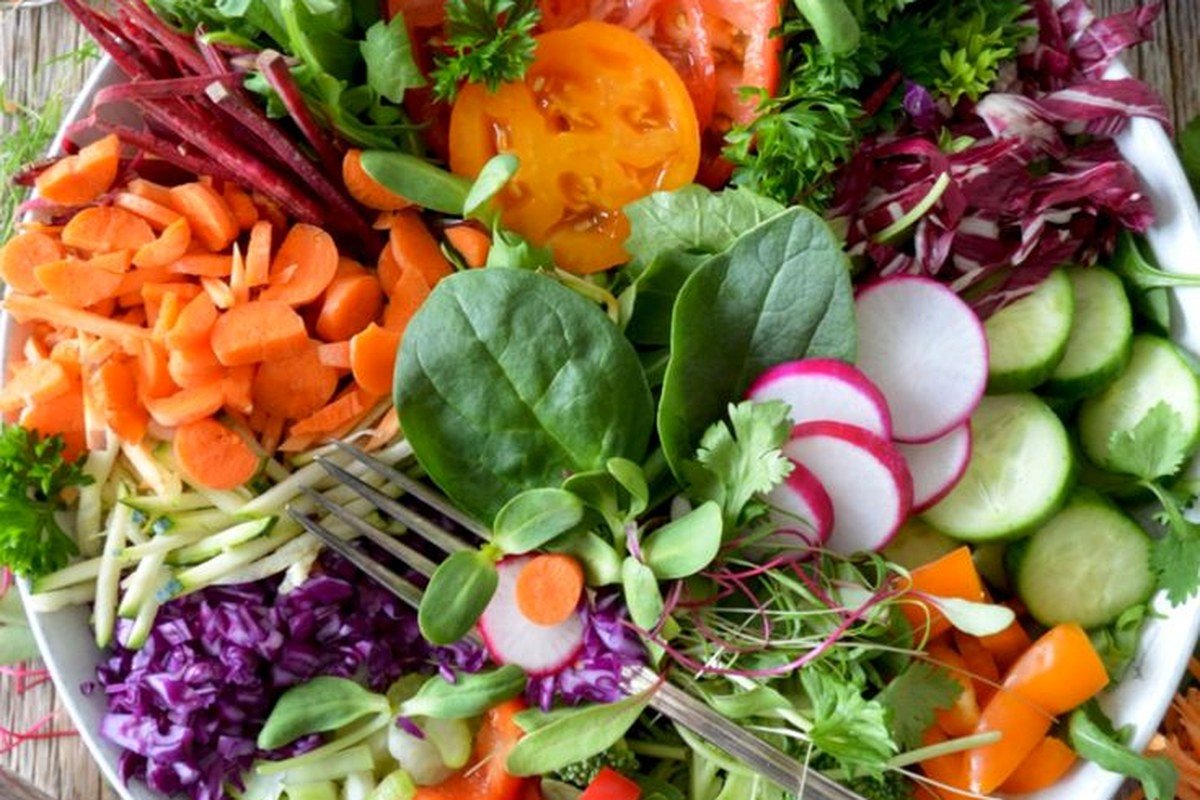
You do not need a new diet. You need more plants on the plate you already eat. Vegetables, fruit, whole grains, beans, lentils, nuts, and seeds give you fibre, vitamins, and minerals with very few downsides.
Do today: add one extra vegetable at dinner. Not a salad you hate. A vegetable you actually like, cooked the way you like it.
What the evidence says: the World Health Organization recommends at least 400 grams of fruit and vegetables a day (about five portions), free sugars under 10 percent of total energy, and salt under 5 grams a day. Mediterranean and DASH eating patterns, which are rich in vegetables, whole grains, and olive oil, are linked to lower cardiovascular risk in large trials. No single food is a “superfood”: the word has no scientific definition, so do not pay extra for it.
3. Drink water instead of sugary drinks
Sugary drinks are the easiest calories to cut, because they do not fill you up. A can of soda, a sweetened coffee, a sports drink, a juice box: all of them add sugar without making you feel full.
Do today: swap one sugary drink for water. Keep a glass or a bottle where you can see it.
What the evidence says: the CDC states that sugary drinks are the leading source of added sugars in the US diet. Cutting two sodas a day cuts about 2,100 calories a week, which is roughly the energy in half a pound of body fat, though weight change depends on everything else you eat and do. The “8 glasses of water a day” rule is not a rule: the Institute of Medicine’s adequate intakes are 3.7 litres a day for men and 2.7 litres for women, counting all water including food, and a 2002 review found no studies supporting the 8×8 figure. Thirst is a reasonable guide for most healthy adults.
4. Sleep 7 to 9 hours on a regular schedule
Sleep is not wasted time. It is when your body repairs itself, consolidates memory, and regulates appetite and mood. Most adults need 7 to 9 hours, and regularity matters as much as length: going to bed and waking up at similar times every day, including weekends, helps your body clock.
Do today: set one fixed wake time for tomorrow, and stick to it even if you slept badly. A fixed wake time anchors the whole schedule.
What the evidence says: a 2015 consensus from the American Academy of Sleep Medicine and the Sleep Research Society recommends that adults sleep 7 or more hours per night on a regular basis. Sleeping under 7 hours is linked to obesity, diabetes, hypertension, heart disease, stroke, and depression. These are associations from observational studies, not proof that short sleep alone causes each condition, but the pattern is consistent across many studies.

5. Move your body 150 minutes a week
You do not need to run marathons. Brisk walking, cycling, swimming, dancing, gardening, and playing with your kids all count. The goal is 150 minutes of moderate activity a week, which is about 20 minutes a day, plus muscle-strengthening on 2 or more days.
Do today: take a brisk 10-minute walk after lunch. Short bouts count now: the WHO 2020 guidelines removed the old rule that activity had to last at least 10 minutes at a time.
What the evidence says: the WHO 2020 guidelines recommend 150 to 300 minutes of moderate activity, or 75 to 150 minutes of vigorous activity, per week for adults, plus muscle-strengthening on 2 or more days. Regular activity is linked to lower risk of heart disease, type 2 diabetes, some cancers, depression, and falls in older adults. If you have a heart condition or another serious health problem, talk to your doctor before starting a new exercise routine.

6. Take one daily pause to manage stress
Stress is not just a feeling. Chronic stress affects sleep, appetite, blood pressure, and mood. You cannot remove all stress, but you can give your body a short break from it every day.
Do today: take 5 slow breaths before your next meal. Breathe in for 4 counts, hold for 4, breathe out for 4. That is one minute.
What the evidence says: the CDC lists deep breathing, stretching, and short breaks as healthy ways to cope with stress, and notes that even 5 minutes can help. This is practical guidance, not a claim that breathing cures anxiety or any illness. If stress is constant and overwhelming, or if you feel anxious or low most days, talk to your doctor. In the US, the Suicide and Crisis Lifeline is 988.
7. Drink less alcohol and do not smoke
Alcohol and tobacco are the two lifestyle factors with the clearest harm. There is no safe level of alcohol use: the WHO stated this in January 2023, and the risk starts from the first drop. Smoking harms nearly every organ, and quitting is the single most effective thing a smoker can do for their health.
Do today: pick one alcohol-free day this week and put it in your calendar. If you smoke, set a quit date, even if it is a few weeks away. If you drink heavily, do NOT stop suddenly without medical help: alcohol withdrawal can be dangerous.
What the evidence says: the WHO (January 2023) states that no level of alcohol consumption is safe for health. The old US guidance of one drink a day for women and two for men is no longer current advice: the 2025-2030 Dietary Guidelines (January 2026) removed the numeric limit, so this article gives the WHO position (no safe level, less is better) and notes the change. For smoking, the CDC quit timeline is: heart rate drops within minutes of quitting, nicotine is gone in about 24 hours, and heart attack risk drops sharply within 1 to 2 years.
8. Eat regular meals slowly and without screens
Eating slowly helps you notice when you are full. Eating in front of a screen does the opposite: you eat more, enjoy it less, and feel less satisfied. Regular meal times also help your body clock and your appetite.
Do today: at one meal, put your fork down between bites and eat without a phone or TV. Just one meal.
What the evidence says: Harvard Health notes that it takes about 20 minutes for the brain to register fullness, so eating slowly gives your body time to catch up. One small study of 10 people found that eating slowly was linked to an average loss of about 9 pounds in 3 months, but that study is far too small to prove anything, so this article flags it as suggestive only. The practical advice stands on its own: slow down, and you will probably eat less without feeling deprived.
9. Stay connected to people
Health is not only food and exercise. Loneliness and social isolation are linked to worse health, and strong relationships are linked to better health and longer life. You do not need a big social circle. A few real connections, kept up regularly, are enough.
Do today: message or call one friend. Not a group chat. One person, one real conversation.
What the evidence says: the US Surgeon General’s 2023 advisory on social connection states that lacking social connection has a mortality impact similar to smoking up to 15 cigarettes a day, and cites a review of 148 studies in which stronger social relationships were linked to about 50 percent higher odds of survival. These are associations, not proof that a phone call adds years to your life, but the pattern is strong and consistent. For more on this, see Happy Life, which covers the Harvard Study of Adult Development and what relationships do for happiness and health.
10. Get regular check-ups and know your numbers
Most serious health problems are easier to deal with when they are found early. A check-up is also the simplest way to learn your numbers: blood pressure, cholesterol, and blood sugar.
Do today: book a check-up, or write down your last blood pressure reading and the date it was taken. If you do not know your numbers, that is the first gap to close.
What the evidence says: the American Heart Association states that normal blood pressure is below 120/80. Cholesterol screening is recommended from age 20, every 4 to 6 years, with LDL cholesterol under 100 mg/dL considered optimal. An HbA1c under 5.7 percent is normal. These are reference values, not personal advice: your doctor interprets them in the context of your age, family history, and other risk factors.
7-day starter plan
One small action per day, 10 to 20 minutes each. This plan is a new synthesis for this article. It covers 7 of the 10 tips; the other three (150 minutes a week, one alcohol-free day, a quit date) are weekly actions, not daily ones.
| Day | Action | Tip |
|---|---|---|
| 1 | Add 500 steps to yesterday’s total | 1. Walk more |
| 2 | Add one extra vegetable at dinner | 2. Eat more vegetables |
| 3 | Swap one sugary drink for water | 3. Drink water |
| 4 | Set one fixed wake time for tomorrow | 4. Sleep 7 to 9 hours |
| 5 | Take a brisk 10-minute walk after lunch, and 5 slow breaths before dinner | 5. Move 150 minutes a week, 6. Manage stress |
| 6 | Eat one meal slowly, without screens, and message or call one friend | 8. Eat slowly, 9. Stay connected |
| 7 | Book a check-up, or write down your last blood pressure reading | 10. Know your numbers |
After the week, keep the actions that felt easy and repeat them. Add the next tip only when the first one feels automatic. A well-known study (Lally and colleagues, 2010) found that a new behaviour took an average of 66 days to become automatic, with a range of 18 to 254 days, so do not expect a new habit to feel easy in three weeks. The “21 days to form a habit” claim is false.
Common mistakes
- All-or-nothing thinking. One bad day does not ruin a healthy lifestyle. Miss a walk, eat the cake, and carry on tomorrow. Perfection is not the goal; most days is.
- Crash diets. Very low calorie diets (under 800 calories a day) should only be used under medical supervision, for a maximum of 12 weeks per NHS guidance. The sustainable pace for weight loss is 1 to 2 pounds a week (CDC), and 5 to 10 percent of body weight over 6 months (NIDDK). Fast weight loss usually comes back.
- Buying supplements first. No supplement is proven to replace a healthy diet, and some supplements can harm the liver or interact with medicines. Fix food, sleep, and movement first. If you take medicines, ask your doctor before taking any supplement.
- Copying an influencer’s routine. A routine that works for a 25-year-old fitness creator may not work for you. Your age, health, schedule, and budget are different. Steal the principle, not the routine.
- Ignoring sleep while chasing workouts. An extra hour of sleep often does more for your health than an extra workout. Sleep is a tip in its own right, not a luxury.
- Chasing magic numbers. 10,000 steps is not a CDC requirement. 8 glasses of water is not a rule. “Superfoods” have no scientific definition. “Detox” diets and cleanses are unproven and unregulated, and the British Dietetic Association calls detox “nonsense”. Your liver and kidneys already do the job.
- Doing everything at once. Ten new habits in one week is a recipe for quitting by day three. One tip at a time, until it feels automatic.
When to talk to a doctor
This article is general information, not medical advice. Talk to your doctor before starting a new exercise routine if you have a heart condition or another serious health problem. Do not stop heavy drinking suddenly without medical help, because alcohol withdrawal can be dangerous. Seek help promptly for chest pain, severe breathlessness, fainting, or thoughts of self-harm. In the US, the Suicide and Crisis Lifeline is 988. In the UK and Ireland, Samaritans is 116 123.
Related reading
More on this site: Happy Life (what science says actually makes life happier), Lifestyle Modification (what lifestyle modification means in medicine, the evidence, and a 30-day plan), Minimalism Lifestyle Tips (25 simple ways to live with less and enjoy more), Lifestyle Photography Tips (25 ways to capture real life beautifully), 10 Tips for a Healthy Lifestyle (this article), and Best Feel Good Movies on Netflix (15 films that lift your mood).
FAQs
What are 10 tips for a healthy lifestyle?
Walk more every day, eat more vegetables and whole foods, drink water instead of sugary drinks, sleep 7 to 9 hours on a regular schedule, move your body 150 minutes a week, take one daily pause to manage stress, drink less alcohol and do not smoke, eat regular meals slowly and without screens, stay connected to people, and get regular check-ups and know your numbers. Each tip in this article comes with one concrete action you can do today.
How do I start a healthy lifestyle as a beginner?
Start with one tip, not all ten. Pick the easiest one, do its action today, and repeat it until it feels automatic. A study found that a new behaviour took an average of 66 days to become automatic, with a range of 18 to 254 days, so expect weeks, not days. The 7-day starter plan in this article gives you one small action per day.
How many steps should I walk a day?
There is no official step target. A large 2022 study of about 78,500 adults found that more steps were linked to lower mortality, with benefits up to about 10,000 steps a day. The 10,000-step figure is NOT a CDC requirement: federal activity guidelines use minutes and intensity, not steps. Start by adding 500 steps to whatever you did yesterday.
How much water should I drink a day?
There is no single rule. The Institute of Medicine’s adequate intakes are 3.7 litres a day for men and 2.7 litres for women, counting all water including food. The “8 glasses a day” figure is a rule of thumb, not a requirement, and a 2002 review found no studies supporting it. Thirst is a reasonable guide for most healthy adults.
How much sleep do adults need?
Most adults need 7 to 9 hours a night on a regular schedule. A 2015 consensus from the American Academy of Sleep Medicine and the Sleep Research Society recommends 7 or more hours per night on a regular basis. Sleeping under 7 hours is linked to obesity, diabetes, hypertension, heart disease, stroke, and depression.
How much exercise do I need per week?
The WHO 2020 guidelines recommend 150 to 300 minutes of moderate activity, or 75 to 150 minutes of vigorous activity, per week for adults, plus muscle-strengthening on 2 or more days. That is about 20 minutes of brisk walking a day. Short bouts count now: the old rule that activity had to last at least 10 minutes at a time was removed.
Is alcohol bad for your health?
Yes. The WHO stated in January 2023 that no level of alcohol consumption is safe for health, and the risk starts from the first drop. Less is better. The old US guidance of one drink a day for women and two for men is no longer current advice: the 2025-2030 Dietary Guidelines (January 2026) removed the numeric limit.
How long does it take to form a healthy habit?
A well-known study (Lally and colleagues, 2010) found that a new behaviour took an average of 66 days to become automatic, with a range of 18 to 254 days. The “21 days to form a habit” claim is false. Expect weeks, not days, and do not give up in week three because the habit still feels hard.
What is the healthiest diet?
No single diet wins. Mediterranean and DASH eating patterns, which are rich in vegetables, whole grains, beans, and olive oil, are linked to lower cardiovascular risk in large trials. The practical version: more vegetables and whole foods, less added sugar and salt, and regular meals eaten slowly.
Do detox diets work?
No. Detox diets and cleanses are unproven and unregulated, and the British Dietetic Association calls detox “nonsense”. There are no randomised controlled trials of commercial detox diets in humans. Your liver and kidneys already do the job.
What are superfoods?
“Superfood” has no scientific definition. It is a marketing word, not a medical one. Blueberries, salmon, and kale are healthy foods, but no single food is magic, and you do not need to pay extra for anything labelled a superfood.
How can I lose weight in a healthy way?
The sustainable pace is 1 to 2 pounds a week (CDC), and 5 to 10 percent of body weight over 6 months (NIDDK). Very low calorie diets (under 800 calories a day) should only be used under medical supervision, for a maximum of 12 weeks. Fast weight loss usually comes back.
Should I take supplements for a healthy lifestyle?
No supplement is proven to replace a healthy diet, and some supplements can harm the liver or interact with medicines. Fix food, sleep, and movement first. If you take medicines, ask your doctor before taking any supplement.
How does stress affect your health?
Chronic stress affects sleep, appetite, blood pressure, and mood. Short daily pauses help: the CDC lists deep breathing, stretching, and short breaks as healthy ways to cope, and notes that even 5 minutes can help. If stress is constant and overwhelming, talk to your doctor.
Why is social connection good for health?
The US Surgeon General’s 2023 advisory states that lacking social connection has a mortality impact similar to smoking up to 15 cigarettes a day, and cites a review of 148 studies in which stronger social relationships were linked to about 50 percent higher odds of survival. A few real connections, kept up regularly, are enough.
What numbers should I know about my health?
Blood pressure (normal is below 120/80, per the American Heart Association), cholesterol (screening from age 20, every 4 to 6 years, LDL under 100 mg/dL optimal), and blood sugar (HbA1c under 5.7 percent is normal). Your doctor interprets them in the context of your age, family history, and other risk factors.
Can a healthy lifestyle prevent disease?
A healthy lifestyle lowers the risk of many diseases, including heart disease, type 2 diabetes, some cancers, and depression, but it does not prevent disease or guarantee good health. No tip in this article is a cure for any disease. Genetics, environment, and luck also matter.
What is the difference between this article and Lifestyle Modification on this site?
Lifestyle Modification covers what lifestyle modification means in medicine, the six pillars, the clinical evidence (including the DPP 58 percent result), and a 30-day plan. This article is the short, practical version: exactly 10 tips, each with one concrete action for today, plus a 7-day starter plan.
What is the easiest healthy habit to start with?
Walking. Add 500 steps to yesterday’s total. It needs no gym, no equipment, and no special clothes, and it counts toward your weekly activity.
When should I talk to a doctor about my lifestyle?
Talk to your doctor before starting a new exercise routine if you have a heart condition or another serious health problem. Do not stop heavy drinking suddenly without medical help. Seek help promptly for chest pain, severe breathlessness, fainting, or thoughts of self-harm. In the US, the Suicide and Crisis Lifeline is 988.
Sources
- World Health Organization, healthy diet fact sheet (at least 400 g fruit and vegetables a day, free sugars under 10 percent, salt under 5 g): https://www.who.int/news-room/fact-sheets/detail/healthy-diet
- World Health Organization, physical activity fact sheet (WHO 2020 guidelines, 150-300 min moderate or 75-150 min vigorous per week): https://www.who.int/news-room/fact-sheets/detail/physical-activity
- World Health Organization, no level of alcohol consumption is safe for health (January 2023): https://www.who.int/europe/news/item/04-01-2023-no-level-of-alcohol-consumption-is-safe-for-our-health
- Centers for Disease Control and Prevention, sugary drinks (leading source of added sugars in the US diet): https://www.cdc.gov/healthy-weight-growth/php/data-research/index.html
- Centers for Disease Control and Prevention, healthy weight loss (1-2 pounds per week): https://www.cdc.gov/healthy-weight-growth/about/index.html
- Centers for Disease Control and Prevention, quitting smoking timeline: https://www.cdc.gov/tobacco/about/index.html
- Centers for Disease Control and Prevention, coping with stress (deep breathing, stretching, short breaks): https://www.cdc.gov/mental-health/about/index.html
- American Academy of Sleep Medicine and Sleep Research Society, consensus recommendation (2015, adults 7 or more hours per night): https://aasm.org/resources/pdf/pressroom/adult-sleep-duration-consensus.pdf
- JAMA Internal Medicine, 2022, steps and mortality (about 78,500 adults): https://jamanetwork.com/journals/jamainternmed/fullarticle/2796058
- Lally, P., van Jaarsveld, C. H. M., Potts, H. W. W. and Wardle, J. (2010). How are habits formed: Modelling habit formation in the real world. European Journal of Social Psychology, 40(6), 998-1009.
- US Surgeon General, advisory on social connection (2023): https://www.hhs.gov/sites/default/files/surgeon-general-social-connection-advisory.pdf
- American Heart Association, blood pressure (normal below 120/80): https://www.heart.org/en/health-topics/high-blood-pressure/understanding-blood-pressure-readings
- Harvard Health Publishing, why eating slowly may help you feel full faster (about 20 minutes for the brain to register fullness): https://www.health.harvard.edu/blog/why-eating-slowly-may-help-you-feel-full-faster-202205272747
- National Institute of Diabetes and Digestive and Kidney Diseases, weight loss (5-10 percent over 6 months): https://www.niddk.nih.gov/health-information/weight-management/adult-overweight-obesity
- NHS, very low calorie diets (under 800 kcal, medical supervision, maximum 12 weeks): https://www.nhs.uk/live-well/healthy-weight/managing-your-weight/very-low-calorie-diets/
- Institute of Medicine, adequate water intakes (3.7 L men, 2.7 L women, total water including food): https://www.nationalacademies.org/news/2004/02/report-sets-dietary-intake-levels-for-water-salt-and-potassium-to-maintain-health-and-reduce-chronic-disease-risk
- Valtin, H. (2002). Drink at least eight glasses of water a day. Really? Is there scientific evidence for “8 x 8”? American Journal of Physiology, 283(5), R993-R1004.
- British Dietetic Association, detox diets: https://www.bda.uk.com/resource/detox-diets.html
- Happy Life, nell-fisher.com: https://nell-fisher.com/happy-life/
- Lifestyle Modification, nell-fisher.com: https://nell-fisher.com/lifestyle-modification/
Table Of Content