
Minimalism Lifestyle Tips (2026) – 25 Simple Ways to Live With Less and Enjoy More
Quick answer
These minimalism lifestyle tips start with a simple idea: Minimalism is a tool for removing the excess from your life so you can focus on what matters, in the words of The Minimalists, Joshua Fields Millburn and Ryan Nicodemus. It is not about owning nothing, living in a white room, or throwing everything away. It is about deciding what adds value to your life and letting go of the rest, then protecting that decision with simple rules: one in, one out; wait 72 hours before a non-essential purchase; and keep only what you use or truly love. A beginner can start in one drawer, in 10 minutes a day, and build from there.
What minimalism actually is (and what it is not)
The core definition
The Minimalists define minimalism as a tool to rid yourself of life’s excess in favor of focusing on what is important, so you can find happiness, fulfillment, and freedom. Their one-sentence version: minimalism is a tool to eliminate life’s excess, focus on the essentials, and find happiness, fulfillment, and freedom. They list five values to focus on instead of things: health, relationships, passion, growth, and contribution. There are no rules in their version. What counts as essential is different for every person.
Minimalism vs decluttering vs frugality
- Decluttering is an action: removing things from a space. It can be a one-time clean-out.
- Minimalism is a lifestyle: an ongoing practice of choosing what stays in your life, including things, commitments, and digital noise.
- Frugality is about spending less money. Minimalism often saves money, but saving money is not its goal. A minimalist can spend a lot on one excellent item and own very little else.
- Keep these three separate. A reader who declutters once has not become a minimalist, and a minimalist is not automatically frugal.
The main schools of thought
| School | Who | Core idea | Key tool |
|---|---|---|---|
| The Minimalists | Joshua Fields Millburn and Ryan Nicodemus | Values first: stuff is the obstacle, not the enemy | 30-Day Minimalism Game, 90/90 rule, 20/20 rule |
| KonMari | Marie Kondo | Tidy by category, keep only what sparks joy | Fixed order: clothes, books, papers, komono, sentimental |
| Swedish death cleaning (dostadning) | Margareta Magnusson | Sort your possessions gradually so your family is not left to do it after you die | Start with large unemotional items, save letters and photos for last |
| Project 333 / capsule wardrobe | Courtney Carver | Dress with 33 items or fewer for 3 months | 33 items, everything else boxed up and sealed |
| Digital minimalism | Cal Newport | Focus online time on a small number of carefully chosen activities | 30-day digital declutter |
| Becoming Minimalist | Joshua Becker | Remove the things that distract you from the things you love | 12-12-12 challenge |
The Minimalists (Joshua Fields Millburn and Ryan Nicodemus). Blog and podcast since 2010, first book Minimalism: Live a Meaningful Life in 2011, Netflix documentary Minimalism in 2016 and Less Is Now in 2021. Their tools: the 30-Day Minimalism Game, the 90/90 rule, the 20/20 rule, the 30/30 rule, and the packing party (pack everything as if moving, then unpack only what you need over three weeks). Their framing is values first: stuff is the obstacle, not the enemy.
KonMari (Marie Kondo). Book The Life-Changing Magic of Tidying Up, published in Japanese in 2011 and in English in 2014, Netflix series Tidying Up with Marie Kondo in 2019. The method: tidy by category, not by location, in a fixed order (clothes, books, papers, komono or miscellaneous items, sentimental items), and keep only what sparks joy. Six rules: commit to tidying, imagine your ideal lifestyle, finish discarding first, tidy by category, follow the right order, ask if it sparks joy. Note: Kondo herself has said that practical items do not need to spark joy in the emotional sense; usefulness counts. Do not present her as saying every kept item must thrill you.
Swedish death cleaning (dostadning). Popularised by Margareta Magnusson’s 2017 book The Gentle Art of Swedish Death Cleaning. Dostadning literally means death cleaning (do is death, stadning is cleaning). It is the gradual practice of sorting your possessions in later life so your family is not left to do it after you die. Magnusson, who died 12 March 2026 aged 91, advised starting with large, unemotional items and saving letters and photographs for last. Her motto: if you do not love it, lose it; if you do not use it, lose it. A 2023 Peacock series produced by Amy Poehler brought it to a wider audience. It is NOT ordinary decluttering and NOT only for old people, though Magnusson originally aimed the book at readers 65 and older. The distinguishing question is: what does owning this cost the people I leave behind?
Capsule wardrobe and Project 333. A capsule wardrobe is a small set of mix-and-match pieces for one season. Project 333, created by Courtney Carver in 2010, is the best-known version: dress with 33 items or fewer for 3 months. The 33 include clothing, accessories, jewelry, outerwear, and shoes. Not counted: underwear, sleepwear, at-home loungewear, workout clothes worn only to work out, and a wedding ring or sentimental jewelry never taken off. Everything else is boxed up, sealed, and put out of sight for three months. Carver published a book of the same name in 2020.
Digital minimalism (Cal Newport). Book Digital Minimalism: Choosing a Focused Life in a Noisy World, published 2019. Newport defines it as a philosophy of technology use in which you focus your online time on a small number of carefully selected and optimized activities that strongly support things you value, and then happily miss out on everything else. Three principles: clutter is costly, optimization is important, intentionality is satisfying. His method is a 30-day digital declutter: take a break from optional technologies for 30 days, rediscover satisfying offline activities, then reintroduce each tool only if it serves a clear value, with rules for how and when you use it. Note: Newport’s claims about smartphones and adolescent anxiety rest largely on Jean Twenge’s work and popular reporting, not on peer-reviewed papers he cites directly. Present the method as a method, not as proven science.
Becoming Minimalist (Joshua Becker). Blog since 2008, book The More of Less (2016) and Clutterfree with Kids (2014). Becker’s framing is family friendly: minimalism is not about removing things you love, it is about removing the things that distract you from the things you love. His tools include the 12-12-12 challenge (find 12 items to throw away, 12 to donate, and 12 to return to their proper place).
25 minimalism lifestyle tips
Home and decluttering
1. Start with one small, visible area, not the whole house. One drawer, one shelf, or the top of one desk. A visible win builds momentum. The whole house is a project; one drawer is a 15-minute task.
2. Work by category, not by room, once you are past the first drawer. KonMari’s order (clothes, books, papers, komono, sentimental) works because decisions get easier with practice and the hardest category comes last.
3. Use the 90/90 rule. From The Minimalists: have I used this in the last 90 days, and will I use it in the next 90 days? If the answer to both is no, let it go. The creators say 90 is not a fixed number; 120 or 180 days also work. It does not apply to seasonal items, holiday decorations, or tax records.
4. Use the 20/20 rule. Also from The Minimalists: if you can replace an item for under $20 in under 20 minutes, let it go. It kills the just-in-case excuse. Some sources call it the 20/20/20 rule; the rule itself is two numbers, $20 and 20 minutes.
5. Play the 30-Day Minimalism Game. Created by The Minimalists, launched 2011: on day 1 remove 1 item, on day 2 remove 2 items, and so on to day 30, when you remove 30 items. Every item must be out of the house by midnight each day. Total over 30 days: 465 items. Best played with a partner, with the hashtag #MinsGame.
6. Try the 12-12-12 challenge. From Joshua Becker: find 12 items to throw away, 12 to donate, and 12 to return to their proper place. Repeat until you cannot find 12 in each group.
7. One in, one out. For every new item that enters the home, one leaves. This is the maintenance rule that stops clutter from coming back.
8. Use a maybe box. Put unsure items in a dated box, seal it, and store it out of sight. If you do not open it in 30 to 90 days, donate it unopened.
9. Give every kept item a home. Clutter returns when things have no place to live. A drawer, a hook, a shelf: if it has no home, it will end up on the nearest flat surface.

Closet and wardrobe
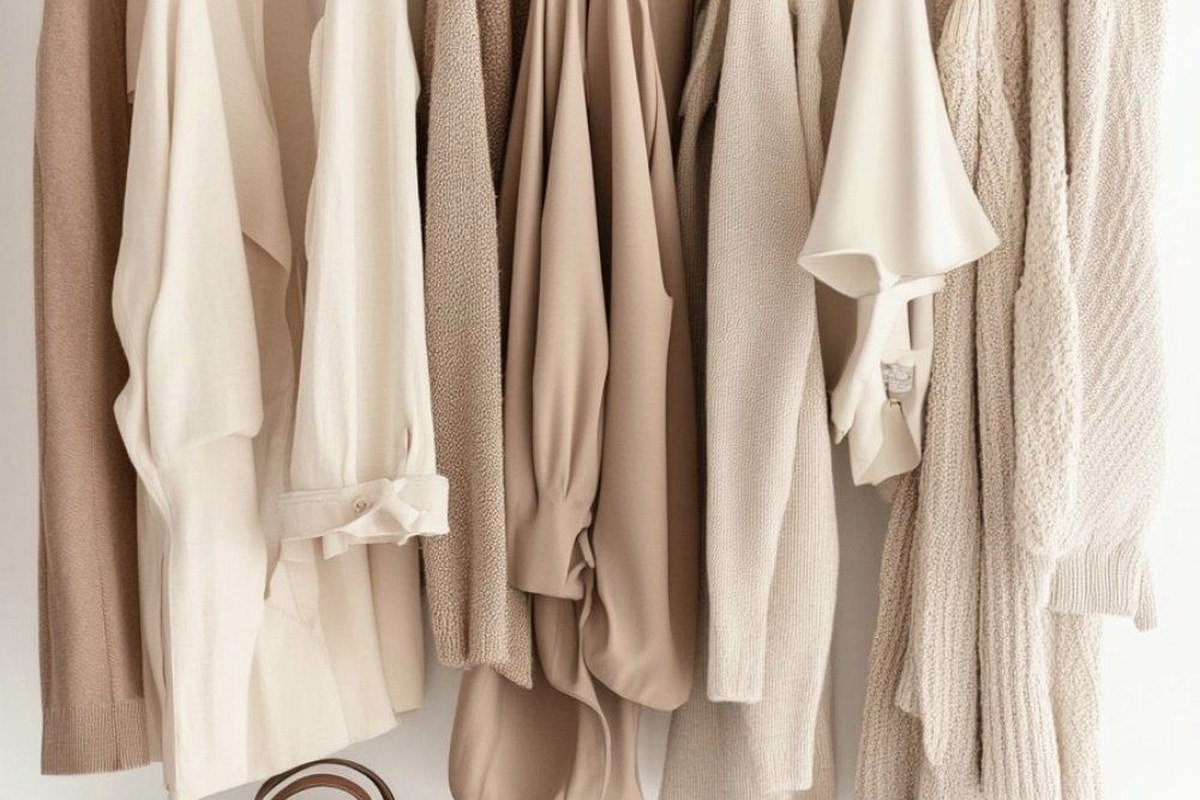
10. Try Project 333. Courtney Carver, 2010: 33 items or fewer for 3 months, everything else boxed up and sealed. Pick from what you already own. Choose shoes and outer layers first, because they use up the count fastest.
11. Build a simpler capsule. About 20 to 25 core pieces you wear constantly, plus up to 10 flex pieces for seasons and occasions. The exact number matters less than the mix-and-match rule.
12. Run the hanger wear test. Hang clothes with hangers facing one way, then turn each hanger around after you wear the item. After three months, the unturned hangers show what you never wear.
13. Keep one-in, one-out for clothes specifically. Clothes are the fastest-growing category in most homes, so they need their own rule. Do not buy new minimal clothes to become a minimalist. That is the consumption trap, covered in the myths section.
Money and spending
14. Use the 72-hour rule. For any non-essential purchase, wait 72 hours. Put it on a list, close the tab, and revisit it in three days. Most of the time the urge is gone. A widely cited figure from Capital One Shopping research puts average US impulse spending at about $254 a month in 2025, around $3,045 a year, spread across roughly ten unplanned purchases of $26 each. Present that as a survey figure from a shopping company, not as academic research. The 72-hour waiting period itself is a practical rule of thumb, not a tested intervention.
15. Use the 30/30 rule. From The Minimalists: for any purchase over $30, wait 30 hours before buying. Use it for medium purchases and the 72-hour rule for bigger ones.
16. Take a no-buy period. Pick a category (clothes, takeaway coffee, books) and buy nothing in it for 30 days. A full no-buy year is an advanced challenge, not a beginner step. Define exceptions in advance (replacements for broken essentials, gifts, medicine).
17. Unsubscribe and unfollow. Unsubscribe from marketing emails and unfollow brand accounts. Removing the trigger beats resisting it.
18. Delete saved card details. Delete saved card details from shopping apps and browsers. Friction is a feature: if buying takes effort, you buy less.
Digital life
19. Do a 30-day digital declutter. Newport’s method: pause optional technologies for 30 days, then reintroduce only the ones that serve a clear value, with written rules for how and when you use them.
20. Turn off all non-essential notifications. Keep only calls and messages from real people. Everything else can wait until you open the app on purpose.
21. Delete apps you have not opened in 30 days. You can reinstall them; the test is whether you miss them. Audit subscriptions once a quarter too: streaming, apps, cloud storage, memberships. Cancel anything unused in the last 90 days.
22. One screen at a time. No phone at meals, no phone in the bedroom. Charge the phone outside the bedroom. Empty the inbox with a simple system: delete, delegate, do it now if it takes under two minutes, or file it. Unsubscribe from every newsletter you have not opened in the last month.
Time and commitments
23. Audit your calendar. List every recurring commitment, then drop, delegate, or shorten one per month. Say no with a default sentence ready, for example: let me check my calendar and get back to you. It buys time to decide instead of agreeing on the spot. One major commitment at a time. A minimalist calendar has white space, not just fewer things.
24. Batch errands and protect white space. Batch errands and admin into one block per week instead of scattering them across every day. Protect one unscheduled hour a day and one unscheduled half-day a week.
Relationships and social life
25. Choose experiences over things, and set boundaries. Minimalism applies to relationships too: fewer, deeper connections rather than many shallow ones. The Minimalists list relationships as the first of their five values. Give experiences, not things, as gifts. Stop keeping gifts you do not want out of guilt: the gift served its purpose when it was given. Thank the giver, then let the object go. Set boundaries with generous relatives: ask for experiences, consumables, or nothing, instead of more objects for your home or your children.
Starter plans
7-day plan (one small action per day, 10 to 20 minutes each)
| Day | Action | Time |
|---|---|---|
| 1 | Clear one surface completely, for example the kitchen counter or the top of your desk | 15 min |
| 2 | Declutter one drawer using the 90/90 rule | 15 min |
| 3 | Turn all closet hangers one way; start the wear test | 10 min |
| 4 | Delete 10 apps you have not opened in 30 days and turn off non-essential notifications | 15 min |
| 5 | Unsubscribe from 10 marketing emails and unfollow 10 brand accounts | 10 min |
| 6 | Put one non-essential purchase on a 72-hour waiting list instead of buying it | 5 min |
| 7 | Fill one bag for donation and put it by the door to leave the house | 20 min |
30-day plan (one focus per week)
| Week | Focus | Daily actions |
|---|---|---|
| 1 | Surfaces and easy wins | One drawer, one shelf, or one surface per day; use the 90/90 rule; fill one donation bag by day 7 |
| 2 | Clothes | Gather all clothes in one pile (KonMari style); keep what you wear and love; start Project 333 or a simple capsule; set the one-in, one-out rule |
| 3 | Paper and digital | Papers: keep only what is in use, needed for a limited time, or must be kept indefinitely; digital: inbox, apps, photos, subscriptions |
| 4 | Money and habits | Start the 72-hour rule for all non-essential purchases; write a values list (what matters most); set a maybe box for unsure items; plan the next 30 days |
Note: the 30-day plan above is a new synthesis for this article, not a copy of any one source’s challenge. The 30-Day Minimalism Game is a separate, named challenge (465 items) and is credited to The Minimalists where it is mentioned.
Myths and mistakes
- Myth: minimalism means owning nothing. Reality: it means owning only what adds value. A minimalist carpenter owns many tools; a minimalist parent owns many children’s books. The number is not the point.
- Myth: you must throw everything away. Reality: donate, sell, recycle, or pass things on. Throwing away usable things is wasteful, and minimalism is not about waste.
- Myth: minimalism is only for rich people. Reality: the aesthetic version (white walls, expensive furniture, designer storage) is a marketing image. The practice costs nothing and often saves money.
- Myth: it is a one-time clean-out. Reality: clutter returns without maintenance rules. One in, one out and a quarterly audit are what make it last.
- Myth: minimalism and kids do not mix. Reality: it works differently with kids, not impossibly. See the family section below.
- Myth: you need to buy new minimal things. Reality: this is the consumption trap. Buying a matching set of storage boxes, a new capsule wardrobe, or minimalist furniture to start minimalism defeats the purpose. Start with what you already own.
- Mistake: decluttering someone else’s things without asking. Never throw away a partner’s or child’s belongings. Declutter your own stuff first.
- Mistake: keeping everything just in case. The 20/20 rule exists for exactly this fear.
- Mistake: confusing minimalism with deprivation. If removing something makes your life worse, it was not excess. Keep it.
- Mistake: doing it all in one weekend and burning out. Small daily actions beat a single exhausting purge.
What the research actually says
No study proves that minimalism makes people happier. There is no randomised trial of becoming a minimalist. What exists is a small set of studies on clutter, attention, stress, and spending. This section presents them with their limits, not as proof.
| Study | What it found | Limit |
|---|---|---|
| McMains and Kastner, 2011, Princeton, fMRI, Journal of Neuroscience 31(2):587-597 | Multiple stimuli in the visual field compete for representation in the visual cortex and mutually suppress each other. Grouping objects into a coherent pattern reduced the competition. | Used abstract shapes on a screen in a lab, not real kitchens or desks. Did not measure stress, happiness, or productivity. |
| Saxbe and Repetti, 2010, UCLA CELF, 30 dual-income families, 60 spouses, Personality and Social Psychology Bulletin 36(1):71-81 | Wives with higher stressful-home scores (more clutter and unfinished-home language) had flatter cortisol slopes and rising depressed mood across the day. The pattern held after controlling for marital satisfaction and neuroticism. | Small and correlational. Measured how people talked about their homes, not how cluttered the homes objectively were. The effect appeared for wives, not husbands. |
| Vohs, Redden, and Rahinel, 2013, Psychological Science 24(9):1860-1867 | People in an orderly room chose healthier snacks and donated more money than people in a disorderly room. People in a disorderly room generated more creative uses for a ping-pong ball. | Small lab experiments with short tasks. Order supports conventional, healthy choices; disorder can support creativity. A tidy desk is not better at everything. |
| Dauch et al., 2018, Infant Behavior and Development 50:78-87, 36 toddlers aged 18-30 months | With 4 toys, play bouts lasted about twice as long (117 seconds on average vs 56 seconds) and children played with each toy in more ways (about 11 ways vs about 7). | Small sample, lab playroom, toys were new to the children. Supports toy rotation, not a rule about how many toys a child should own. |
| Thacher and Reinheimer, 2015, SLEEP 2015 abstract, 281 respondents, 83 at risk for hoarding | People at risk for hoarding disorder reported more trouble falling asleep, more sleep disturbances, and more daytime problems. | A conference abstract, not a full peer-reviewed paper; a self-selected online sample; the effect was in people at risk for hoarding disorder, not ordinary messy bedrooms. A larger 2022 study (Nutley and colleagues, 20,473 adults) found hoarding linked to poor sleep but no evidence that clutter itself was the key ingredient. Verdict: not proven for everyday mess. |
| Van Boven and Gilovich, 2003; Gilovich, Kumar, and Jampol, 2014; Dunn, Gilbert, and Wilson, 2011 | People report more satisfaction from experiential purchases than material ones, because experiences strengthen social bonds, form a bigger part of identity, and invite fewer social comparisons. Dunn and colleagues propose eight principles for spending money well, including buying experiences instead of things and spending money on others. | Mostly self-reported satisfaction in surveys and lab studies, largely with US students and adults. Hobbyists and collectors can get as much joy from objects, so the advantage is about typical purchases, not a law. |
What is NOT proven
- No study shows minimalism cures anxiety or depression. Clutter correlates with stress in small studies; causation is not established.
- No study shows a tidy home makes you more productive. The Princeton study is about visual attention, not work output.
- No study supports a specific number of possessions. Anyone selling a magic number is selling a preference, not science.
- Do not quote the 80 percent claim as research. The claim that 80 percent of what we own we never use is widely attributed to the National Association of Professional Organizers, but no original study or dataset has been found for it. It appears in organizer blogs and a 2003 trade magazine quote from Barbara Hemphill. This article does not present it as research.
- Do not quote the 300,000 items figure as fact. The claim that the average American home contains 300,000 items is widely repeated and attributed to UCLA research, but no published paper gives that number. This article leaves it out.
Minimalism with kids, in a small home, and on a low budget
With kids
- Declutter your own stuff first. Joshua Becker’s rule: declutter your bedroom, closet, kitchen, living room, and garage before asking a child to declutter theirs. Children copy what they see.
- Set physical boundaries, not item counts. Becker’s example: his five-year-old son could keep any toys he wanted, as long as they fit against one wall of the playroom. Other boundaries: one bin under the bed for art supplies, one shelf for stuffed animals, one drawer for collections, one bookcase for books.
- Never declutter a child’s things secretly. It breaks trust. Do it together, and let the child choose what goes.
- Use a toy rotation: keep a small set of toys out and store the rest. The Dauch 2018 study supports this: fewer toys out at once meant longer, more creative play. Rotate monthly or seasonally.
- Teach giving: let children choose donations themselves and, where possible, see where they go.
- Ask relatives for experiences, consumables, or money toward one big thing, instead of more toys. Birthdays and holidays are the best decluttering moments: one new toy in, one old toy out.
- Accept imperfection. A family home with children will not look like a magazine. The goal is less friction, not a perfect room.
In a small home
- Small homes force the question minimalism asks anyway: does this earn its space? Use vertical storage, multi-use furniture, and one clear surface per room.
- The maybe box matters more in a small home, because there is nowhere to hide unsure items.
- Rent or borrow rarely used items (tools, party supplies, sports gear) instead of owning them.
On a low budget
- Minimalism costs nothing to start. The first steps are removing things, not buying things.
- Sell what you do not need before buying anything new. Use free options first: library instead of buying books, borrowing instead of buying tools.
- Beware the aesthetic trap: you do not need matching baskets, a new wardrobe, or minimalist furniture. A cardboard box works as a maybe box.
- A no-buy month in one category is free and often saves more than any decluttering sale earns.
Related reading
More on this site: Lifestyle Photography Tips (a calmer eye for everyday moments), Happy Life (what science says actually makes life happier), Lifestyle Modification (evidence and a 30-day plan for changing your daily habits), Best Feel Good Movies on Netflix (slow evenings with less noise), Best Drama Movies on Netflix (long, quiet films for a calmer night in), and Funny Family Movies (family time built on shared experiences, not more things).
FAQs
What is a minimalist lifestyle?
A minimalist lifestyle is the ongoing practice of choosing what stays in your life, including things, commitments, and digital noise, so you can focus on what matters. The Minimalists define it as a tool to eliminate life’s excess, focus on the essentials, and find happiness, fulfillment, and freedom. It is not about owning nothing.
How do I start minimalism as a beginner?
Start with one small, visible area, one drawer or one shelf, for 10 to 15 minutes. Then follow the 7-day plan in this article: one surface, one drawer, the hanger test, 10 apps, 10 unsubscribes, one 72-hour waiting list, and one donation bag. Small daily actions beat a single exhausting purge.
What are the first steps to becoming a minimalist?
First, decide what matters most to you (the values list in week 4 of the 30-day plan). Then start with one drawer, apply the 90/90 rule, set the one-in, one-out rule, and put unsure items in a maybe box. Do not start by buying anything new.
How can I be a minimalist with kids?
Declutter your own stuff first, set physical boundaries instead of item counts (for example, toys must fit against one wall), never declutter a child’s things secretly, use a toy rotation, and ask relatives for experiences instead of more toys. Accept imperfection: a family home with children will not look like a magazine.
What is the 30-day minimalism game?
Created by The Minimalists (Joshua Fields Millburn and Ryan Nicodemus), launched 2011: on day 1 remove 1 item, on day 2 remove 2 items, and so on to day 30, when you remove 30 items. Every item must be out of the house by midnight each day. Total over 30 days: 465 items. Best played with a partner.
What is the 90/90 rule?
From The Minimalists: have I used this in the last 90 days, and will I use it in the next 90 days? If the answer to both is no, let it go. The creators say 90 is not a fixed number; 120 or 180 days also work. It does not apply to seasonal items, holiday decorations, or tax records.
What is Project 333?
Created by Courtney Carver in 2010: dress with 33 items or fewer for 3 months. The 33 include clothing, accessories, jewelry, outerwear, and shoes. Not counted: underwear, sleepwear, at-home loungewear, workout clothes worn only to work out, and a wedding ring or sentimental jewelry never taken off. Everything else is boxed up, sealed, and put out of sight for three months.
What is the KonMari method?
Marie Kondo’s method from The Life-Changing Magic of Tidying Up (Japanese 2011, English 2014): tidy by category, not by location, in a fixed order (clothes, books, papers, komono, sentimental items), and keep only what sparks joy. Practical items do not need to thrill you; usefulness counts.
What is Swedish death cleaning?
Dostadning, popularised by Margareta Magnusson’s 2017 book The Gentle Art of Swedish Death Cleaning: the gradual practice of sorting your possessions in later life so your family is not left to do it after you die. Start with large, unemotional items and save letters and photographs for last. Her motto: if you do not love it, lose it; if you do not use it, lose it. It is not ordinary decluttering and not only for old people.
What is digital minimalism?
Cal Newport’s 2019 book Digital Minimalism defines it as focusing your online time on a small number of carefully selected activities that support things you value, and happily missing out on everything else. His method is a 30-day digital declutter: pause optional technologies for 30 days, then reintroduce each tool only if it serves a clear value, with rules for how and when you use it.
Is minimalism only for rich people?
No. The aesthetic version (white walls, expensive furniture, designer storage) is a marketing image. The practice costs nothing and often saves money. A cardboard box works as a maybe box, and a no-buy month in one category is free.
Does minimalism make you happier?
No study proves that minimalism makes people happier. There is no randomised trial of becoming a minimalist. What exists is a small set of studies on clutter, attention, stress, and spending, and they are correlational or lab-based. Experiences do tend to bring more satisfaction than things, but that is about typical purchases, not a law.
How many things should a minimalist own?
There is no number. No study supports a specific number of possessions. A minimalist carpenter owns many tools; a minimalist parent owns many children’s books. The number is not the point; what adds value is.
What is the one in, one out rule?
For every new item that enters the home, one leaves. It is the maintenance rule that stops clutter from coming back. Apply it to clothes specifically too, since clothes are the fastest-growing category in most homes.
How do I stop buying things I do not need?
Use the 72-hour rule for non-essential purchases and the 30/30 rule (over $30, wait 30 hours). Unsubscribe from marketing emails, unfollow brand accounts, and delete saved card details from shopping apps so buying takes effort. A company survey from Capital One Shopping put average US impulse spending at about $254 a month in 2025, so the habit is common, not a personal failure.
Can minimalism help with stress?
It might, but it is not proven. A small UCLA study of 30 families found that wives who described their homes with more clutter language had flatter cortisol slopes and rising depressed mood, but the study was correlational and measured how people talked about their homes. No study shows minimalism cures anxiety or depression. If clutter stresses you, decluttering is still worth trying, but do not expect a cure.
What are the disadvantages of minimalism?
Taken too far, it can become deprivation (removing things that make your life better), guilt about owning anything, or a new kind of consumption (buying matching minimal things). It can also cause conflict if you declutter someone else’s belongings without asking. The fix is in the myths section: keep what adds value, never declutter another person’s things, and do not buy new things to become a minimalist.
How do I declutter my house fast?
Fast is the wrong goal, but if you need speed, use Becker’s 12-12-12 challenge (12 to throw away, 12 to donate, 12 to return to their place, repeat), work by category starting with clothes, and use the 90/90 and 20/20 rules for quick decisions. One weekend of purging usually burns you out; small daily actions last longer.
What is a capsule wardrobe?
A small set of mix-and-match pieces for one season. Project 333 is the best-known version (33 items for 3 months). A simpler version is about 20 to 25 core pieces you wear constantly, plus up to 10 flex pieces for seasons and occasions. The exact number matters less than the mix-and-match rule.
Is minimalism the same as decluttering?
No. Decluttering is an action: removing things from a space, and it can be a one-time clean-out. Minimalism is a lifestyle: an ongoing practice of choosing what stays in your life, including things, commitments, and digital noise. Frugality is different again: it is about spending less money.
Sources
- The Minimalists, FAQ page: https://www.theminimalists.com/faqs/
- KonMari, About the KonMari Method: https://konmari.com/about-the-konmari-method/
- The Spruce, What Is Swedish Death Cleaning: https://www.thespruce.com/swedish-death-cleaning-4801461
- Wikipedia, Swedish death cleaning: https://en.wikipedia.org/wiki/Swedish_death_cleaning
- 101 Planners, 30-Day Decluttering Challenge (Minimalist Game rules and history): https://www.101planners.com/30-day-decluttering-challenge/
- Apartment Therapy, Netflix Less Is Now decluttering tips (30-day game, 30/30 rule, packing party): https://www.apartmenttherapy.com/netflix-less-is-now-decluttering-tips-36864861
- WealthUp, What Is the 90/90 Rule: https://wealthup.com/90-90-rule/
- Synchrony, Simplify Your Life, 5 Tips for Decluttering (90/90, 20/20, 12-12-12): https://www.synchrony.com/blog/home/5-ways-to-declutter-your-home.html
- Project 333 rules (Courtney Carver, Be More with Less, via Looksy summary): https://looksy.tantostudio.com/blog/project-333/
- Monely, The 72-Hour Rule: https://monely.app/blog/en/the-72-hour-rule-how-to-stop-impulse-buying-for-good/
- My Beautiful Budget, How to Stop Impulse Buying, The 72-Hour Rule (Capital One Shopping figure): https://mybeautifulbudget.com/blog/stop-impulse-buying-72-hour-rule/
- Cal Newport, Digital Minimalism (2019), definition and three principles, via Springer chapter quoting Newport 2019, p. 28: https://link.springer.com/chapter/10.1007/978-3-031-45638-1_4
- Joshua Becker, Becoming Minimalist, navigating minimalism with kids: https://www.becomingminimalist.com/author/jbecker12/page/99/
- McMains, S. and Kastner, S. (2011). Interactions of top-down and bottom-up mechanisms in human visual cortex. Journal of Neuroscience, 31(2), 587-597. PMID 21228167. Full text: http://www.jneurosci.org/content/31/2/587.full.pdf
- Saxbe, D. E. and Repetti, R. (2010). No place like home: Home tours correlate with daily patterns of mood and cortisol. Personality and Social Psychology Bulletin, 36(1), 71-81. Full text: https://www.healthdesigns.net/wp-content/uploads/2021/03/saxbe-repetti-pspb-2010.pdf
- Vohs, K. D., Redden, J. P., and Rahinel, R. (2013). Physical order produces healthy choices, generosity, and conventionality, whereas disorder produces creativity. Psychological Science, 24(9), 1860-1867. DOI 10.1177/0956797613480186. PubMed: http://pubmed.ncbi.nlm.nih.gov/23907542/
- Dauch, C., Imwalle, M., Ocasio, B., and Metz, A. E. (2018). The influence of the number of toys in the environment on toddlers’ play. Infant Behavior and Development, 50, 78-87. DOI 10.1016/j.infbeh.2017.11.005. PubMed: https://pubmed.ncbi.nlm.nih.gov/29190457/
- Thacher, P. and Reinheimer, A. (2015). Sleep quality and sleep disturbance in those at risk for hoarding disorder. Abstract presented at SLEEP 2015. American Academy of Sleep Medicine: https://aasm.org/people-at-risk-of-hoarding-disorder-may-have-serious-complaints-about-sleep/
- Van Boven, L. and Gilovich, T. (2003). To do or to have? That is the question. Journal of Personality and Social Psychology, 85(6), 1193-1202.
- Gilovich, T., Kumar, A., and Jampol, L. (2014). A wonderful life: Experiential consumption and the pursuit of happiness. Journal of Consumer Psychology, 25(1), 152-165.
- Dunn, E. W., Gilbert, D. T., and Wilson, T. D. (2011). If money does not make you happy, then you probably are not spending it right. Journal of Consumer Psychology, 21(2), 115-125.
Table Of Content